Sunday, June 2, 2013

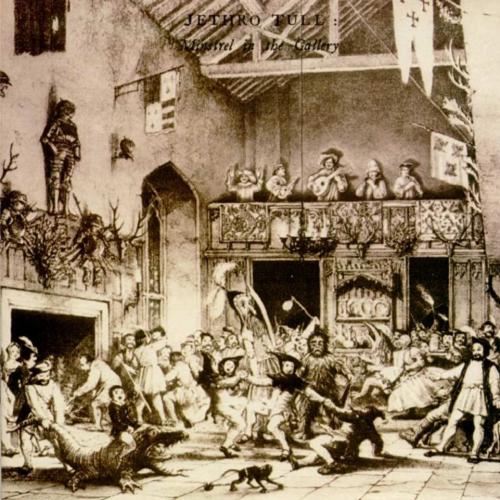
Jethro Tull- Minstrel in the Gallery (1975)

Minstrel in the Gallery is the final album by the classic lineup of Jethro Tull. With Ian Anderson on vocals/flue, Martin Barre on guitar, Jefferey Hammond Hammond on bass, Barrimore Barlow on drums and John Evans on keys, the group set out to keep on keeping on. This album is more of that same classic mix of prog rock, hard rock, and folk rock.

This record, Tull's 8th, has some of their hardest, sharpest material yet. It's a pseudo-concept album, with a "band of traveling minstrels" being introduced to "a lord and lady" and then playing some songs. One would think this would lend itself to Tull's folksy side, but Minstrel in the Gallery is surprisingly heavy. Of the Tull record's I've heard, this one has by far the most guitar dominance. Usually, Barre seemed to be ore a complementary player for Anderson's words and flute, but here, the guitar is at the forefront. The pastoral passages are kept to a minimum, and there's lots of stuff on here that would not be that out of place on a Led Zeppelin album. This is not a bad thing at all. I appreciate Jethro Tull taking on new ground and evolving their sound while not at all turning their back on prog. Highlights of this album include the title track, which has quite cold yet surprisingly human lyrical themes about performance art and service (disillusion with touring was a big inspiration for Anderson's work on this record), "Black Satin Dancer", which builds immense tension through interplay between guitar, bass, and flute much like a ballet, and the nearly side long "Baker Street Muse", which is sort of like a mini-version of Thick as a Brick or A Passion Play.

This album took me a little bit of time to warm up to as the great stuff about it is not as obvious and show-stopping as that of other great Tull records. Yet, given repeated listens, Minstrel in the Gallery has moved up in my estimation. This is a great record, the keystone in the long career of Jethro Tull as they transitioned from prog-folk to hard-prog and chock full of musical merit.

Grade: B+

Sunday, May 26, 2013

Ashra- New Age of Earth (1977)

Ashra, a late 70's German Progressive-electronic outfit, evolved from the Krautrock group Ash Ra Temple. New Age of Earth marks their debut effort. Although it claims to be a collaborative effort, it is in fact a solo effort by Manuel Göttsching, keyboardist and electronic expert who had led Ash Ra Temple (other members would contribute to later Ashra releases). This record sees a plunge into a lighter, fully electronic sound, distant from any Krautrock past.

When I compare this to other prog-electronic releases from the late 70s, (Stratosfear era Tangerine Dream, Klause Schulze), New Age of Earth sounds remarkably bright. This is a very mellotron heavy album, and it generates a sound that evokes floating through nature. The tones are kept warm and fresh, and less of the alienation that is often a hallmark of prog-electronic is present. Even the track titles suggest this intention- "Sunrain", "Ocean of Tenderness", "Deep Distance", and "Nightdust". Everything on this record flows. This can be a bad thing- at times, New Age of Earth does get a little boring as the passages move on without having any aim. However, most of the time, I like the effect. This record is a cohesive experience, that relaxes the listening mind with mellow movements. I have no doubt this album could have influence Brian Eno and the ambient movement which would grow during the 80s.

I give New Age of Earth a thumbs up. It's not ground breaking, but it's solid. The pleasant feel evoked by this album gives me reason to come back to it frequently, and it makes a great, absorbing landscape in which you can easily get lost in.

Grade: B

Thursday, May 23, 2013

Jukebox #8

Today I'm featuring some songs by The Doors, particularly looking for their considerable proto-prog influence. Rest in Peace, Ray Manzarek.


Sunday, May 19, 2013

Progressive Rock- Cracked

I'm very busy finishing up my last finals/fun of my sophomore year of college, so in lieu of a review, this week you get to read Cracked, the online humor site, take on Prog and my comments:

http://www.cracked.com/funny-2359-progressive-rock/

Count Felix's reaction's:


  • Spongebob is not an instrument. Horseradish is not an instrument either.
  • That Atomic Rooster cover.... yes. I've never seen it in person and I still refuse to believe it exists.
  • Always good to put that classic video of Focus anywhere possible. When everyone in the world has seen it, Earth will be a better place.
  • Peter Gabriel is not wearing pants there either. Whatever it is, it looks intense.
  • Not all classic prog sounds like it was made on drugs. At least, no more so than any other genre of music in the 70s. Disco Duck anyone?
  • The Planet of the Dragons is the most derpy bandname ever.

Sunday, May 12, 2013

Pink Floyd- The Dark Side of the Moon (1973)

I'm going to revisit this old classic, which was the second album I reviewed on blog mk. 1. At that time, Dark Side of the Moon was my favorite album of all time. What makes Dark Side of the Moon so magical? It's clearly got an enormous audience of people who love it- 15 years on the billboard chart, and entire factory dedicated to just making this record, a place as the #2 album of all time on my general music rating site of choice (http://rateyourmusic.com). Roger Waters (bass), David Gilmour (Guitar), Richard Wright (Keyboars), and Nick Mason (Drums) had done a lot of good space rock up to this point, but this was something else. It was transcendent. This record was grounded in space rock and psychedelia  but had something more.

The genius of Dark Side of the Moon is the atmosphere, the all around feeling it creates. This is a record that immerses this listener in sound. Dark Side is the ultimate headphones record, and it thunders. The perfect balance of emotion, distance, and musical technicality comes together and builds upon itself into a unified work. And what a work it is. "Breathe", "Time", "Us and Them", I probably don't even need to describe them to you. They just pull you along in to a world of existential musing. The more I listen to the record, the less important I think those lyrics- which are great and have plenty of room for interpretation- are not what makes Dark Side special for me. It's that atmosphere- this record feels boundless and unhinged. Some people complain that "Money" interrupts that flow- I just don't see it. It still has the same people making the same sounds, just a little harder. That booming pulse "balances on the biggest wave" and comes through all the same- and this pulse is what ties down the whole thing. In parts, Dark Side of the Moon is fine. As a whole work, it's utterly phenomenal.

I will admit, I don't think this is my favorite album of all time anymore. It's damn close though, and that does not stop me from coming back to Dark Side of the Moon time and again. It's not a record where you find something new every time- after a while, you just keep finding that enveloping atmosphere, and it gets richer and richer with each listen. No prog fan should be without it.

Grade A+

Wednesday, May 8, 2013

Jukebox #7

Today's selections are from Can, Pink Floyd, and Van Der Graaf Generator


Sunday, May 5, 2013

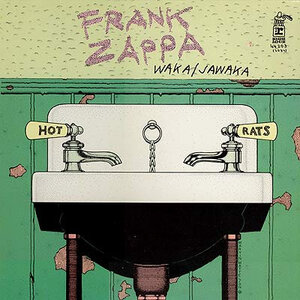
Frank Zappa- Waka/Jawaka (1972)

We're going to take a turn for the weird this week with a dip into the extensive back cataloge of Frank Zappa. Waka/Jawaka fits into a phase of Zappa's career where he was going back and forth between genres and generally trying out whatever he damn well pleased. This album is the second in a trilogy of sorts, all of which are heavily inspired by Jazz. However, upon a listen, Waka/Jawaka really has little in common with Hot Rats (1969), and is more in line with The Grand Wazoo (1972).

If Hot Rats had intensity, aggression, and gusto, Waka/Jawaka is a smooth, polished, and articulate jazz-rock record. The arrangements are much more restrained,with a less wild feel. Smooth jazz is what the inspiration is here. However, Zappa does more than just provide an album of elevator music. He adds some musical merit which elevator music lacks. For example, he plays around with time signatures, the track "Big Swifty" contains passages in 7/8, 6/8, 3/4, and 4/4. There is also the presence of keyboard work which takes some inspiration from Space Rock, zoning out in the background while everything else plods along. The album is split between two short tracks ("Your Mouth" and "It Might Just be a One Shot Deal"), which have vocals and are typical Zappa humor and satire, and two longer, 10+ pieces ("Big Swifty" and "Waka/Jawaka") which are instrumental and focus on soloing

Waka/Jawaka is a decent listen, but there's light years of differences between it and the far superior Hot Rats. Waka Jawaka lacks the energy and driving force that can really draw the listener in. The music here is technically very good, but I rarely find myself bothering to listen to it. Not one of Zappa's best.

Grade: C

Sunday, April 28, 2013

Genesis- A Trick of the Tail (1976)


Genesis are no doubt one of prog rock's greats, but in 1975, their future looked uncertain. Peter Gabriel, the face of the band, has left estranged from Genesis, leaving drummer Phil Collins to take his first turn in the spotlight at vocals. This left the quartet of Collins, Tony Banks, Mike Rutherford, and Steve Hackett to keep things going and make a statement. A Trick of The Tail is the result of this effort. Where would the band evolve?

A Trick of the Tail still absolutely has the Genesis signatures all over it. The Gabriel era was clearly very prone to exploring fantasy and imagination and had a feel to match. A Trick of the Tail does maintain much of that quintessential English storytelling. Stories about powerful, intimidating mountains, mythical creatures, and court intrigues are here to be found. However, there is clear musical evolution on A Trick of the Tail. The Gabriel era had been epic, and Gabriel was the narrator of all these fantasies. Here, the music seems more restrained, focusing on a smaller number of characters and on more simple, non-epic situations. Collins is a protagonist, not a narrator. This new type of song is prominently displayed on "Ripples" which strips down the arrangements much below what had been found on prior albums, down to just Collins singing and a harpsichord at some points. Even on the faster tempoed songs like "Dance on a Volcano" and the title track, there is more focus on individual sounds rather than a grand epic wall. A Trick of the Tail will provide you with what you want out of Genesis in ample supply: tight symphonic arrangments, classically inspired melodies, and just the right amount of progressive risk taking to make good tracks great.

Every time I listen to A Trick of the Tail, I like it more and more. All of the great things about Genesis are here. Their old sound and new sound are fused effectively to create a seriously well executed album. Listen up for some fantastically emotional keyboard work from Banks.

Grade: A

Wednesday, April 24, 2013

Jukebox #6

Today, I've got selections from Soft Machine, Yes, and PFM for your listening pleasure.


Sunday, April 21, 2013

Rick Wakeman- The Six Wives of Henry VIII (1973)


Today, we'll examine the debut offering from Yes' most famous keyboardist, the oft-praised, oft-mocked Rick Wakeman. The composition of this album is a little interesting for a concept album. As I'm sure you can guess, Wakeman's concept here is to capture the personalities of the six wives of Henry VIII via progressive rock. While touring Yes' Fragile, Wakeman read a book on the wives, and he was reminded of old melodies he had written down but never used for anything. He decided to revive those tracks, flesh them out, and make this album, recorded for A&M records. This is the result. Many members of Yes guest on the proceedings.

I'm a student of Tudor history myself (I'm currently working on an undergraduate thesis on the counter-reformation of Queen Mary), so I've listened to this trying to see if Wakeman actually tried to make a stab at history or was just throwing down melodies. For the most part, I say: no, he did not actually make an accurate instrumental rock opera about the wives of Henry VIII. Why is the notoriously slutty Catherine Howard getting a calm, grand piano driven ballroom piece, which then morphs into a harpsichord driven bar-room jig? In an overall sense, Wakeman uses bombastic, loud grand pianos, harpsichords, and keyboard sounding synthesizers to capture the feel of Catholic Mass music that would have been contemporary to Henry. He makes the interesting decision to put the wives out of order, with the Catherine of Aragon leading off like she's supposed to, but then doing Anne of Cleaves and Catherine Howard, followed by Jane Seymour, and then Anne Boleyn. He finishes with Catherine Parr, like history did. Very interestingly, Catherine of Aragon, despite being Henry's wife as long as the others combined, gets the shortest track by far. Individually, other than that Cathedral feel which is this album's backbone, the tracks vary greatly in tempo and Wakeman's keyboard instrument of choice. Catherine of Aragon is a slower, strong peice that builds to a climax, representing her tenacity under fire from Henry (this is one part he did well historically). Anne of Cleaves is more upbeat, Jane Seymour is almost strictly a pipe organ, representing her piety, and so on. However, performance-wise, this is all about Rick Wakeman. He deftly bends his keyboard melodies across instruments with immense intensity. All else fades into the background under the onslaught of Wakeman's bombastic keyboards. The Six Wives of Henry VIII.

I don't think Wakeman read that book very closely. There doesn't seem to be much a theme to this outside of "inspired by the Renaissance". However, nothing here is outright bad. I think these melodies are fine, and they did deserve better than to just be discarded. I'm glad Wakeman dredged them up. There's intensity and skill here which make The Six Wives of Henry VIII worth having, though the record could use more sonic variety than "prog-church music".

Grade: B-

Monday, April 15, 2013

King Crimson- In The Wake of Poseidon (1970)


In The Wake of Poseidon is a Dark, dreary album, cast from the same mold as its predecessor, In the Court of the Crimson King. The prior album of 1969 was a triumph that defined the entire Prog Rock Genre, and how and if King Crimson would continue to contribute to the budding genre in the new decade was up in the air. Beginning a long tradition of lineup turnover (all King Crimson albums before the 80s have a different lineup), Greg Lake, Ian McDonald, and Michael Giles formally left the group. Despite this, Lake and Giles, along with Giles' brother Michael, performed on this album on a session-only bassist. The mastermind behind King Crimson, Robert Fripp, remained on as the guitarist, and lyricist Peter Sinfield also remained with the group. Singer Gordon Haskell and woodwinds man Mel Collins rounded out the album's performers. The stopgap nature of this album does reflect in the work.

One thing In The Wake of Poseidon is not is original. I can rarely think of a non-pop act, certainty not a prog act, who so blatantly re-hashed a prior work than here. This is In the Court part two, at least on its A side. "Pictures of a City" is a re-hash of "21st Century Schizoid Man", almost down to the last note. Same tempo, same acid guitar, same distorted scratch vocal from Lake, even the same stop start section (and I mean the same stops and starts TO A TEE). Unbelievable. While "Cadence and Cascade" and "In the Wake of Poseidon" are also pretty clear rip-offs of  their prior "I Talk to the Wind" and "Epitaph" respectivly, they do deviate more. These three pieces all serve the same functions: rocking, battering, spiteful attack of sound, followed by a pastoral, flute driven cool down, and then followed by midevilish epic. Side two does chart new territory. "Cat Food" is a mix of themes seen elsewhere: Lake's vocals are again warped into a scratching, tortured noise, but the instrumentation is much quieter  It is in fact a rather popish song, with a clear melody and something like a verse-chorus musical structure. Then you have the 11 minute epic "The Devil's Triangle". Inspired by the classical composer Gustav Holst's "Mars: Bringer of War" from the planets suite, it builds slowly like a marching army which culminates in a slogging thunder of mellotron, snare drum beats, and bass guitar before stopping, and then re-staring even more chaotically. These two B side tracks build upon prior Crimson works instead of treading water.

Nowhere on In The Wake of Poseidon, however, does the spark of passion that so dominated In the Court come through. That lineup had burned out too fast, other opportunities opening up for the non-Fripp members (particularly Lake, now the L in ELP). King Crimson was rescued by hiring these departed members as studio musicians, but a masterwork could not come out under such conditions. If you like their first album, you'll get more of the exact same here, but watered down. I think In The Wake of Poseidon is ok, probably being the 5th best 60's/70's KC album.

Grade: C+

Wednesday, April 10, 2013

Jukebox #5

Here's a taste from my most recently reviewed album, Joy of a Toy by Kevin Ayers:


and a preview of my next, In the Wake of Poseidon by King Crimson:


And a little bit of Jethro Tull, 'cause we all love us some Tull.

Sunday, April 7, 2013

Kevin Ayers- Joy of a Toy (1969)


I will kick off the revived blog in similar fashion to the old, reviewing an album from a recently deceased member of the Canterbury Scene in their honor. Kevin Ayers was an original member of Soft Machine, performing in their early shows and on their first album. He left in 1968, retreating to Ibiza off the Coast of Spain. The songs on Joy of a Toy were written during this productive, reclusive phase.

Joy of a Toy is above all a whimsical album. This is not one of those gloomy, brooding Progressive Rock albums. Instead, Joy of a Toy is one of the most upbeat, refreshing, and relaxing albums in the movement. Must of the music is largely acoustic in nature. The entire thing is shock full of upright piano, horn, and flute touches, with mostly bouncing beats. This is also notably a a very lyrical album. However, again, no existential angst, the lyrics are very simple, upbeat, often about love, and come off like a fairy tale  What makes  Joy of a Toy work as an early Prog album, however, is it's play with sound. Tracks like "Girl on a Swing" combine a subtle synth track and occasional electronic sounds into a pastoral piece, and it sounds interesting, but not disturbing. "Stop This Train (Doing it All Again)" uses a slowed down opening to create a chaotic effect which matches its lyrics about disease in a public place. Little touches like these help the album gain a unique little bit of panache that makes Ayers into a relatable storyteller and folsky progster. OTher standout tracks that I adore are "Song for Insane Times", which is a matter of fact ode to the swinging sixties which Ayers seems to know was on its way out, and "The Lady Rachel", a slower piece that tells the tale of either a dreaming woman or a suicide, depending on how dark you want to read the lyrics.

Ayers did something very cool an unique on Joy of a Toy. I've never quite seen another member of the Prog Rock seen effectively fuse a childish feel and whimsical doings on with well thought out music theory and effective use of the studio. The album does not fall particularly well into the Canterbury catalog, but that is to its credit, not its fault.

Grade: A-

Tuesday, April 2, 2013

Count Felix Returns

Well, hi internet. Good to see you after a two year absence.

I'll come clean with you, internet. For a year and a half, I regularly updated a prog blog. And then, I suddenly stopped. Why? Well, a number of reasons. Fist of all, I didn't really start this thing with the proper intentions. I had envisioned the Prog Blog as something mostly geared at a group of friends. I thought they might be interested, and I fell for that trap. They didn't give a shit, and when I turned the focus out to the general internet, I didn't really know what I was doing. Second, I didn't know my ass from a hole in the ground. I pretended like I knew a lot about music theory, synthesizers, and the like and could give an intelligent analysis. Like most high school aged males, I was off the money. I kept going to make an ego trip, but had nothing much to say. Thirdly, my collection was running out. I didn't have the money to acquire needed material, especially in the cases where I did my tri-annual "national spotlights" on foreign countries.

So, it's been two years and a month since I last posted on the blog. I'm ready. As I've grown up, I've mostly addressed the later two, and I think I'm interested in truly designing a reviews blog for the internet at large. So, there will be some changes around here.

1) Count Felix's Prog Blog will now focus on reviews and band biographies. The editorials I was putting out were embarrassing and terrible, stating highly clichĂ©d opinions on Prog. I won't say I'll never put out an editorial piece, but expect them rarely.

2) I'm going to adopt a regular update schedule that's a little different than the past. In the old days I aimed for 5 posts a month on random days. This was awkward and let me put things off, contributing to the final end of Count Felix's Prog Blog v.1.0. Now, you can expect an album review EVERY SUNDAY, starting this coming Sunday, April 7th. In addition to the 4-5 reviews a month, there will be jukebox features (still the same format- three Youtube videos of prog pieces) that will be posted EVERY OTHER WEDNESDAY, starting next Wednesday, April 10th.

3) My old reviews vary wildly in quality- some are still pretty good and some I'm not so fond of. I might re-review a number of albums I already approached in the future, although I will promise everyone that for the first month of Prog Blog v.2.0, I will only do albums I've never tackled online.

4) I'm also going to take requests from the viewing audience, if any of you are still out there. Feel free to suggest albums you want reviewed.

With that, I'll stop for now. I've grown up a lot since I started Prog Blogging in May 2009 and I'm determined to finally put out a high quality product.

Wednesday, March 23, 2011

Download Generation and Prog

Today, the West gets its music online. There are many advantages to this situation, as music is now more accessible, more portable, and via both legal and illegal means, cheaper than ever. However, all these changes have put one negative effect into the Prog Rock relm, but many positive ones.

The losses Prog Rock takes from the download culture are easily apparent. Back in the vinyl days, bands could really take full advantage of the visual aspect of album products. It's impossible to get the same effect on CDs and 3- inch thumbnails as it was on four sleeves worth of cardboard that's nearly a square foot. Art was always a big avenue of creativity for the progsters, and this loss is pretty significant.

However, downloading gives a nice global perspective to Prog Rock. Back in the 70's, importing Krautrock, French Prog, or just about any non-English prog into the world outside of its parent country was rather difficult. While things did get around, it was on a much more limited basis than today. With the digital age, it is easy to discover old Italian prog bands just surfing iTunes, and at least until recently many of these were for discount prices. Globalization has proved a positive way to generate much greater quantities of word of mouth. Also, the digital file does not scratch and warp, so for such intricate music it is a far superior format to the vinyl record.

Tuesday, February 22, 2011

Count Felix Begs Flaming by Reviewing Asia


To the typical Prog Rock fan, the existence of the group Asia is a horror. When you've got such esteemed Prog Rock alumni in one place (Steve Howe, Carl Palmer, John Wetton, and Geoff Downes), one would be more than in their right to cringe at the result. Asia, sent to stores in 1982, ended up being a pop rock album, and shamelessly so? What happened?

Well, though the pressures of commercialization hit this "supergroup" (and many other classic prog groups in the 80's), you take what you can get. I'm not going to defend Asia, say it's comparable to Wish You Were Here or Thick as a Brick, nor will I say it's as enjoyable a piece of early 80's pop in the same way Thriller or Remain in Light. But its not that bad, all things considered. While "Only Time Will Tell" just eats at you with its pure levels of 80's cheese and insincerity, this same fist-pumping, arena rock vibe can be so bad its good on tracks like "Heat of the Moment" and "Sole Survivor". This does have a certain nostalgia to it, and while not so appealing to a prog rock fan, it's certainly decent pop music.
It seems to me the majority of this album's criticizim is about what it's not, and not for what it is. While I would have loved to see with turn into a prog rock album, it isn't, and it must be accepted. When I saw Yes in concert, Asia opened for them. Half the audience was there to see Asia, the other half Yes. Clearly, they were making a product for someone, that was well liked, and their opening act was nearly as good as Yes themselves (mostly due to Carl Palmer- the dude is incredible). I think it's in the best interest of the prog fans to leave Asia alone, and just not listen to it if so inclined.
Really, not that horrid. Even for a hardcore Prog fan like myself, it's still so bad it's good. Grade: C-.

Friday, February 11, 2011

Bill Bruford: The Autobiography


Another blog first: a book review. I just got done reading Bill Bruford's autobiography, published in 2009 as he was retiring from the stage.In 350 pages, Bruford muses over his story with typical English humor and numerous anecdotes.

Rather than being some sort of chronological tale, Bruford categorizes things by topic. Loosely. Each Chapter starts off with a F.A.Q., anf the sections of the chapter range from highly relevant to the question to mercilessly off topic. He also spends almost no time on Yes, with probably no more that 20 or 30 pages on the subject. Bruford instead opts to focus on King Crimson and his solo carrer in jazz. If anything, Bruford makes his life story out to be one of a slow musical growth from rock into jazz, the music that truly captivates him. Therefore, if you're just reading for stories about days of prog rock glory, you'll probably not find this a great read.

However, the book is not that. It is an excellent read. In its passages one gets to see the true mentality of a Prog Rock musician, what it quests for, and the end result. In the end of it all, Bill Bruford's journey led him to leave Yes because he felt he couldn't continue to grow as a musician there, leave King Crimson for the same reason, and retire at his peak. All throughout, Bruford is witty, approachable, and somewhat self depreciating. I'd have liked to read a bit more about the Prog Rock days, but this was an excellent on sight purchase at the book store. Grade: B+.

Wednesday, February 2, 2011

Tuesday, January 25, 2011

Focus- Moving Waves


Today we take a trip to the Netherlands, home of the much loved symphonic prog group Focus. Known for their excellent guitarist Jan Akkerman and highly eccentric keyboardist/flautist Thjis van Leer, Moving Waves , their second album, was released in 1971 (with the title of Focus II in their homeland). The album also features Pierre van der Linden on drums and Cyril Havermans on Bass. Focus was a primarly instrumental group, and did a pleathora of styles over the years, in fact, none of their albums really has the same feel.

The album kicks off with the well known track "Hocus Pocus", which features yodeling prominently and became a trans-Atlantic radio hit with its epic guitar sections and drum fills changing after every chorus. It's a chaotic mess. This is contrasted with the brief acoustic guitar work "Le Clochard" right after it. The album includes three other small songs on its A side: "Janis", "Moving Waves", and the second instalment of their self title series of songs. "Moving Waves is notable for featuring some rare vocals on a Focus record, but it's not super exiting, while the other two have nice flute work. The B side is dedicated solely to the 22 and a half minute "Eruption", which is a heavy handed work of music. The keyboards dominate this one, and it ultimatley can't hold interest beyond the 8 minute mark.

Though it's got some duds, Moving Waves has a lot to offer. Akkerman's guitar performances are exquisite. Grade: B

Wednesday, January 19, 2011

Pink Floyd- Atom Heart Monther


It is 1970. The Psychedelic age is closing out, and your band needs direction. Where to go? Pink Floyd took the route into Progressive Rock, and created Atom Heart Mother. Their first really entry into the genre, the album sits in a slightly awkward transition period, but manages to stay strong.

The album's A side is the 23 minute long title track. Though not the first epic in Prog Rock history, it truly shows the potential of the genre. The band, particularly Rick Wright, experiment with synthesizer sounds, use of orchestra, and long movements plastered seamlessly together. Using horns, shifting themes, rhythms, and chord structures, the piece covers many of the moods of Progressive rock. Fanfare? Has it. Guitar heroics? Has it. Solemn interlude? Has it. Though it has a lot of strengths, it does drag a little, the Floyd were not quite ready for the full side long slog. However, it also was the practice run for "Echoes" down the line, and is much better than its reputation. On side B, don't miss the quicker songs. Water's "If" is a sweet love song, Wright's "Summer '68" is a nice piece of prog-pop.

A nice piece in and of itself, and an indicator of a bright future. Grade: B+